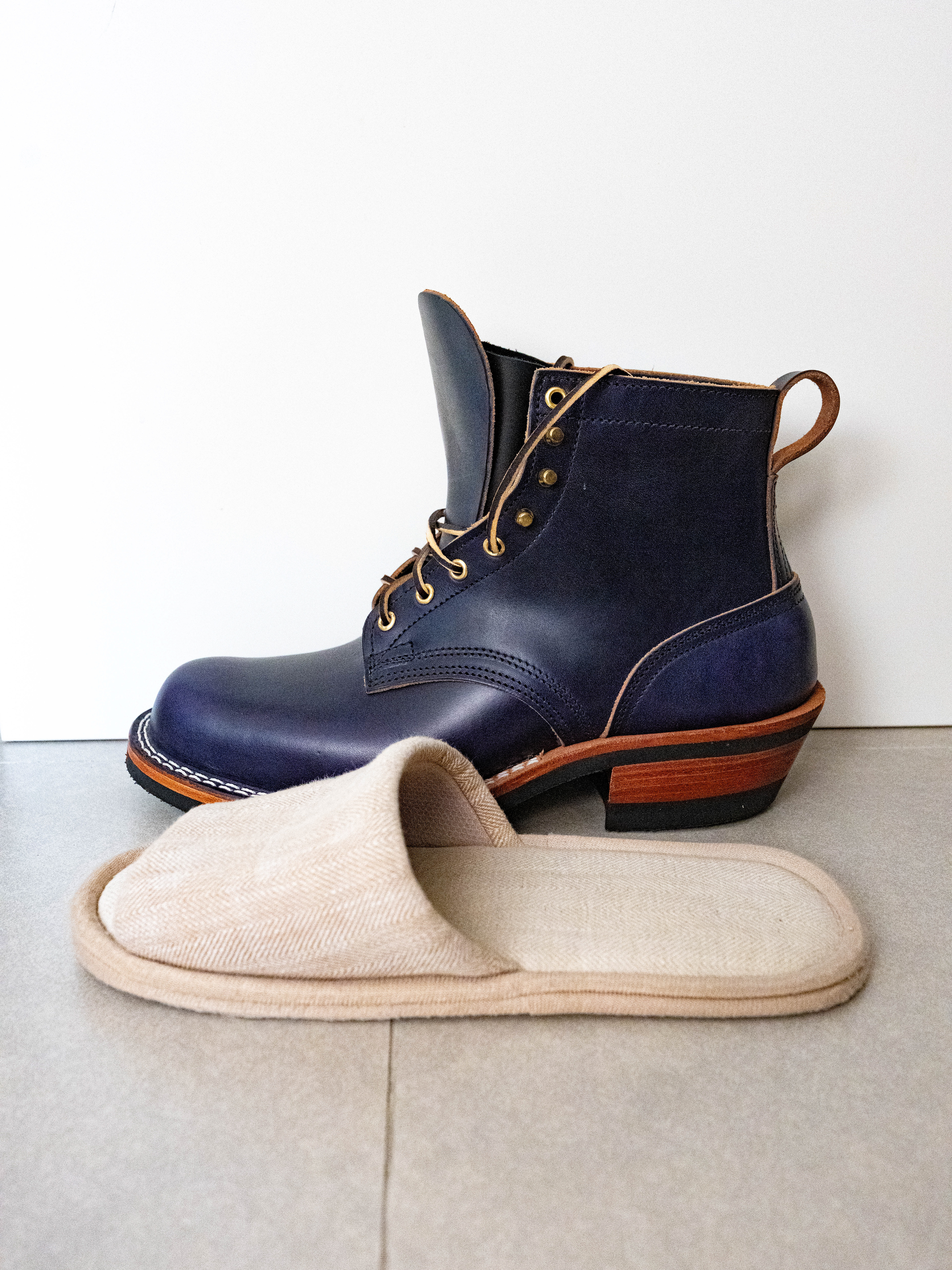
The NICKS BOOTS' ROBERT (COBALT)
An adventure diving into the world of boots, and why Nicks Boots are the best bar none.
Part 1 of ?
Part 1 of ?
https://nicksboots.com/
Nicks Robert in Cobalt
The fit, leather, construction, price, and Spokane-made texture of this boot shape behind the blue boot that has no business being this damn good.
A blue boot, usually where taste goes to get photographed, complimented, then quietly exiled to the back of the closet. Not this time.
A blue boot, usually where taste goes to get photographed, complimented, then quietly exiled to the back of the closet. Not this time.
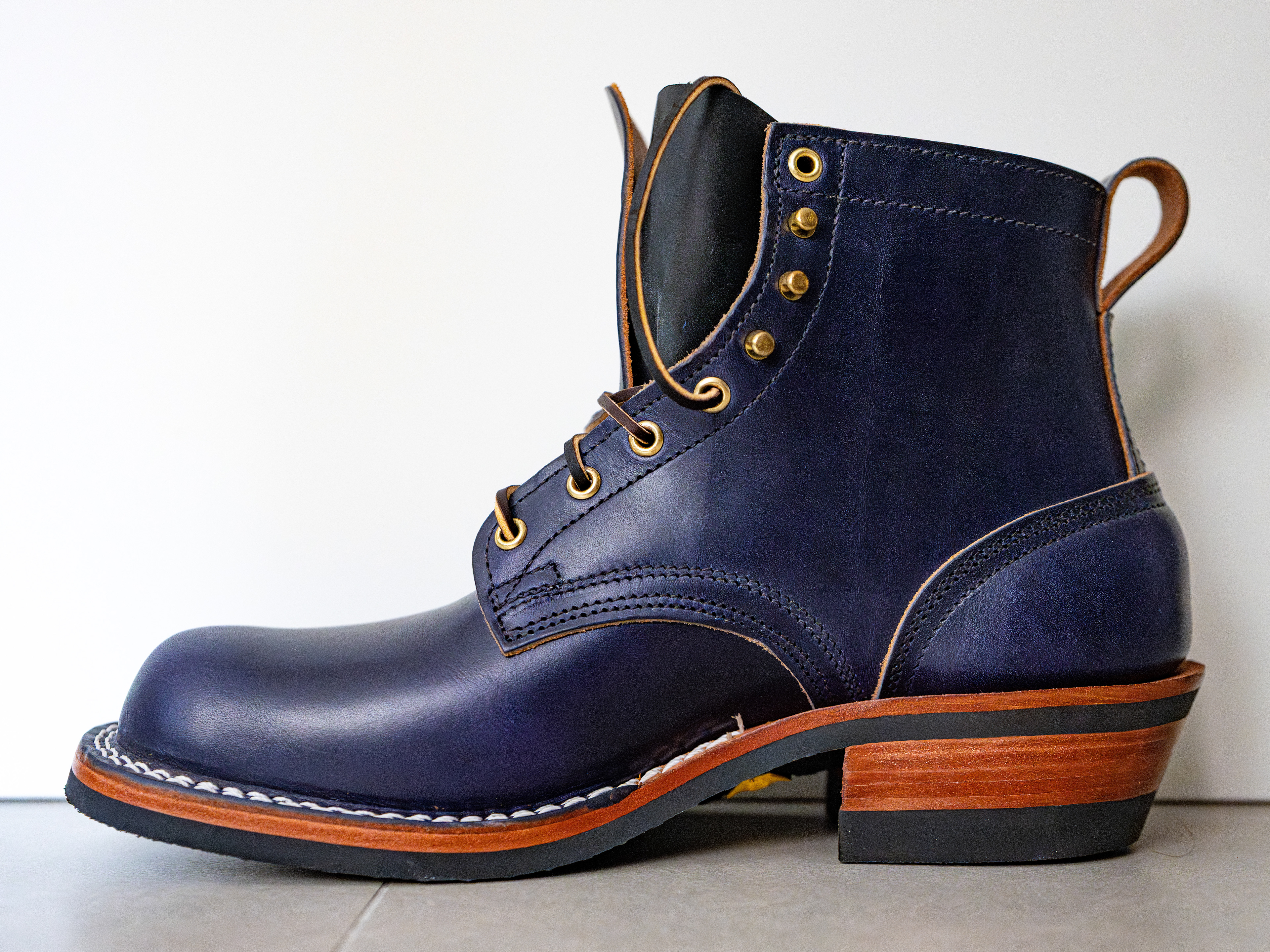
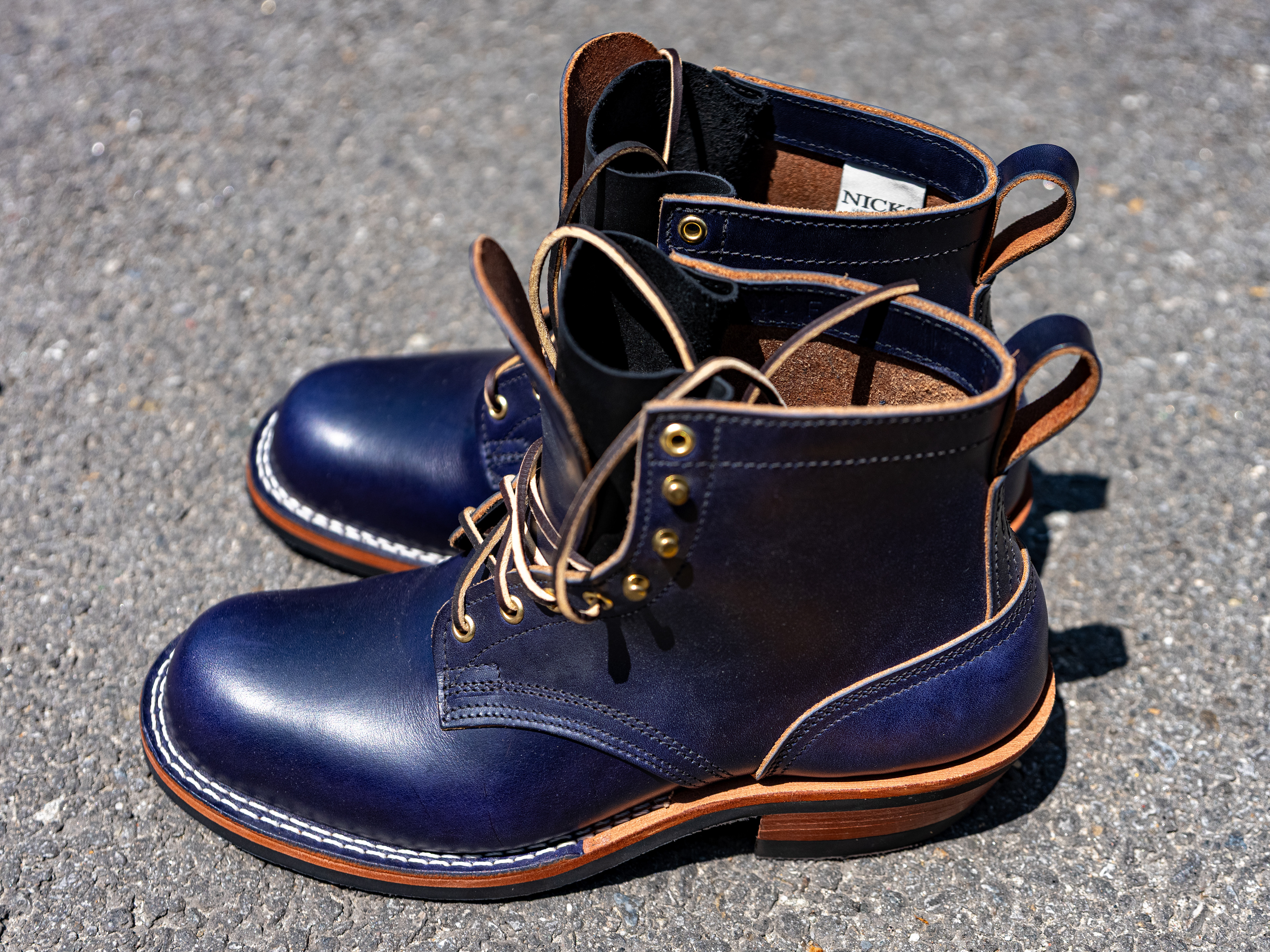
The Nicks Robert in Wickett & Craig Double Stuffed Cobalt survives that trap because the color has a real boot underneath it. The pair under review uses the Robert platform: 6-inch height, 55 Classic Arch, celastic toe, V-bar sole, dogger heel, and a beautiful natural edge. Nicks lists the regular Robert with those core specs, while its Cobalt Double Stuffed gallery gives the leather its own official home. Put together, the idea is simple enough: a serious Spokane pattern wearing an unserious color with a straight face.
The result is admittedly expensive, stiff, slow to arrive, and hard to stop looking at. A soft-boot person looking for instant comfort should leave this one alone. A buyer who wants one pair to wear with everything should probably start with brown. The cobalt Robert is for either the person who already understands the safe answer and keeps looking at the blue pair anyway, or someone like me who has never owned a proper pair of boots and decides to take a leap of faith.
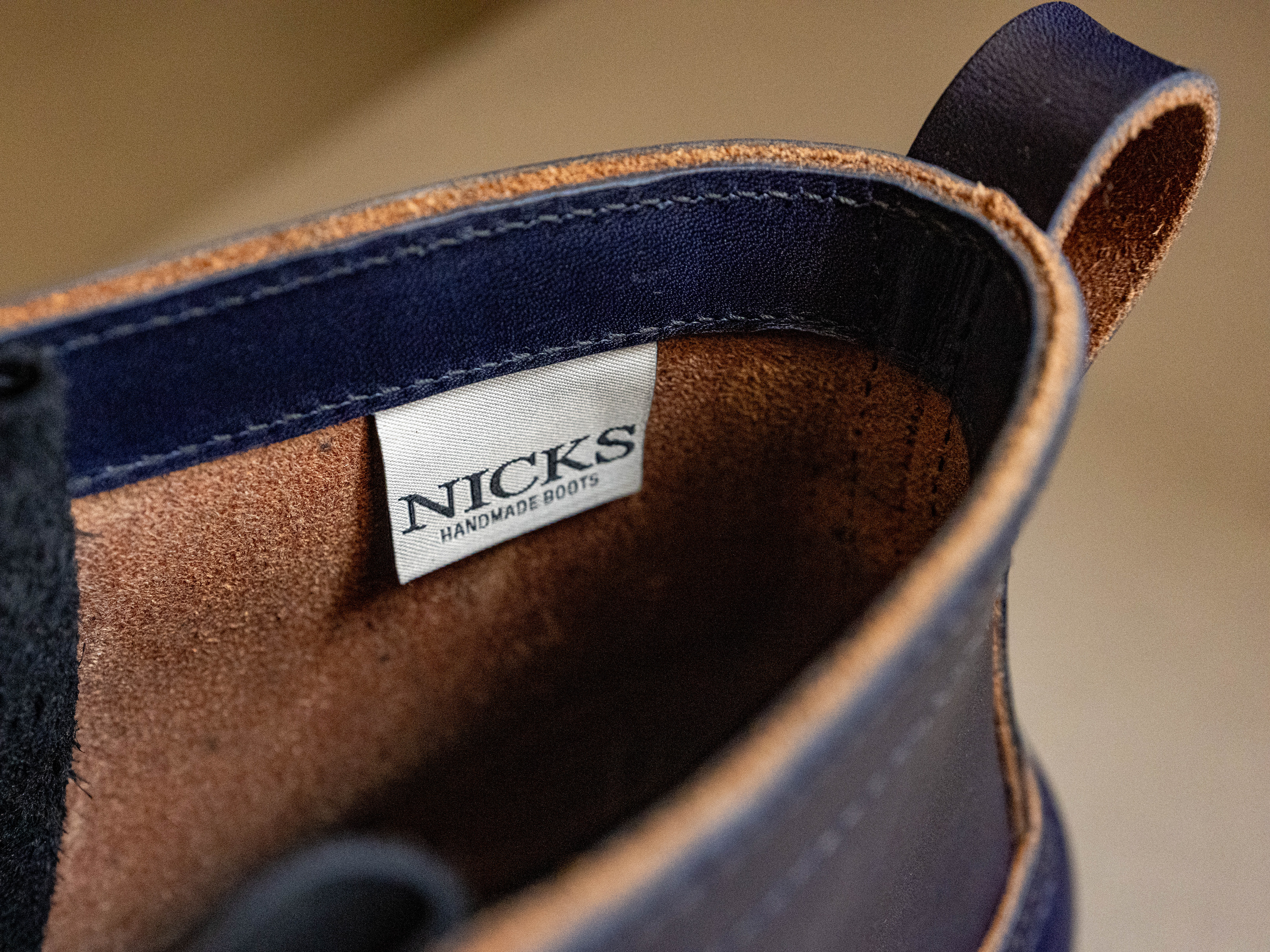
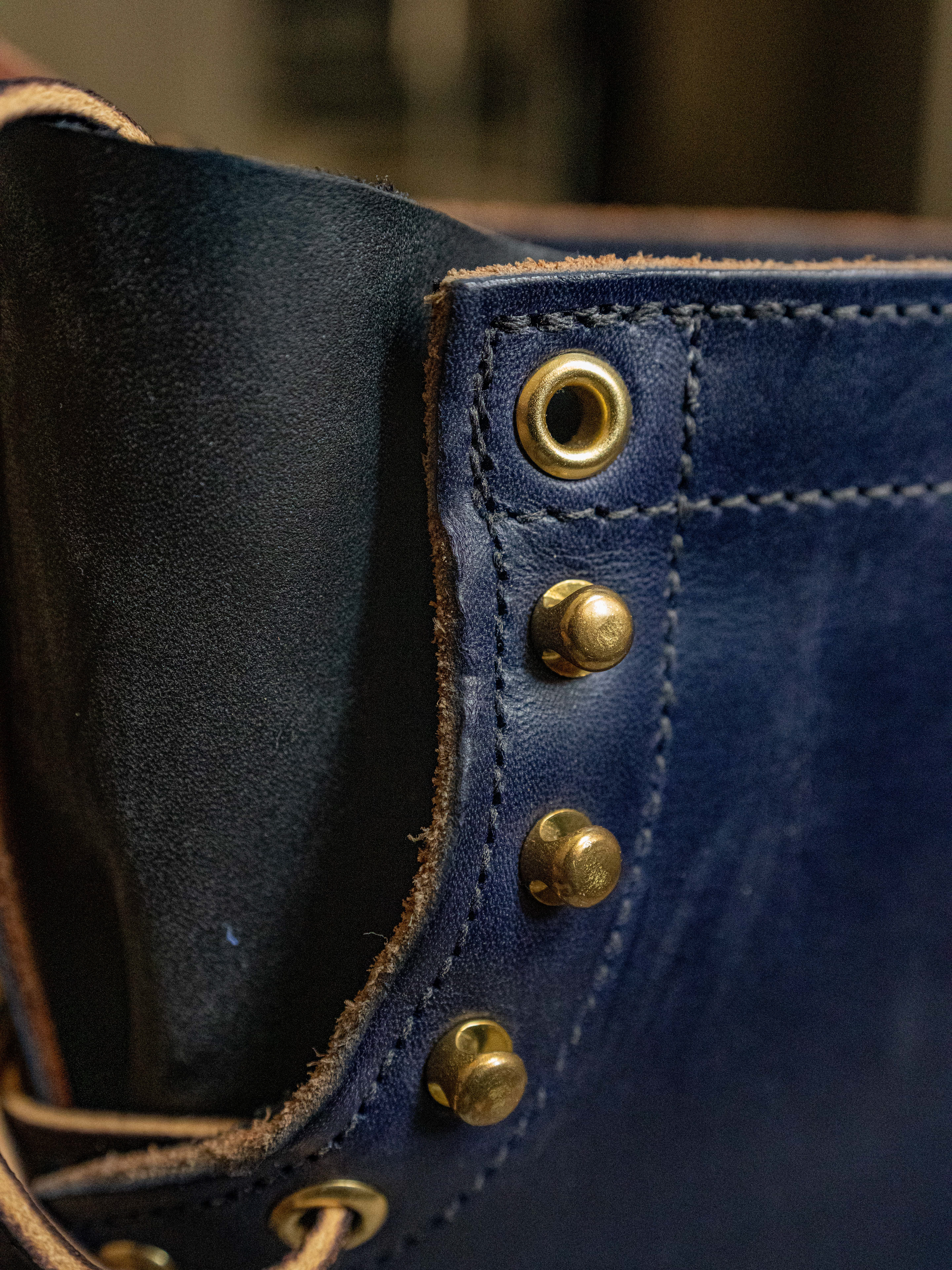
Blue With a Spine
The Robert works because the boot refuses to get cute. Plain toe, high heel, heavy leather, exposed stitchdown, and a profile that still looks like it came from a work-boot family instead of a mood board. The cobalt does the dangerous work on top of that structure. It sits somewhere between Japanese denim, grocery store ink, and a bruise, depending on the light. Indoors, it can behave. Near a window, it wakes up. Across the vamp, the flex pulls lighter. Around the heel, the color darkens and starts doing the thing good leather does, which is make perfection look a little suspicious.
On a sleeker boot, this color could slide into novelty. On the Robert, the last, heel, sole, and stitchdown edge keep it from floating away. The boot has enough mass to make the blue feel intentional rather than decorative, which is why it works best with clothes that are willing to shut up for a while: denim, fatigue pants, olive chinos, black jeans, gray sweatshirt, plain coat.
The best outfit for it is usually the laziest one: dark denim, plain socks, a white T-shirt, and a jacket that has no interest in competing.
The 55 Last
The 55 Classic Arch is the first real filter. If you hate arch support, the Robert is going to feel less like footwear and more like an argument you have to lace. The arch sits high, the heel gives the boot posture, and the first wears feel structured before they feel friendly. Plenty of good feet will dislike that setup immediately. It's worth the break-in, though.
Use the Nicks sizing page as a measuring tool rather than reassurance. The headline is half down from Brannock length; the real work is width, instep, heel shape, socks, and arch tolerance. The page also walks through tape-measuring width, which matters on a boot with this much leather and structure. A Robert ordered by memory can punish you for being casual.
For fit context: my pair is size 11, width F. In normal shoes, I usually wear somewhere between an 11.5 and 12 depending on brand and model, and my foot measures about 4E wide.
Over six months, I've worn these bad boys every week or two, usually for special outings rather than daily punishment, and they're still pristine. The sides and upper bridge of my foot hurt most at first, which makes sense: a 4E foot is asking a lot from a thick leather boot with this much arch and structure. The surprise was the duration. Based on the break-in stories I had read online, I expected a longer little war. This was shorter, less dramatic, and more precise. Once the boot settled, the fit became extremely natural. Though heavy, a better fit than my 990v6's, with a more comfortable toe box ironically.
Nicks support and the Nicks guide got me to a size that felt almost suspiciously exact for a foot this wide, and that matters more than any romance about suffering through break-in.
The pressure area to watch is the instep. Nicks has a blog post that calls this kind of top-foot pressure the Horseshoe of Death. The name sounds like shop folklore until one eyelet is too tight and your whole afternoon relocates to a strip of leather across the top of your foot.
If the width is wrong, stop. If the instep pressure is sharp and fixed, stop. If the arch is new and annoying without being painful, loosen the lacing, wear thicker socks if that helps the volume, and give the last a fair chance before declaring war on it.
Luckily in my case, they fit like a glove.
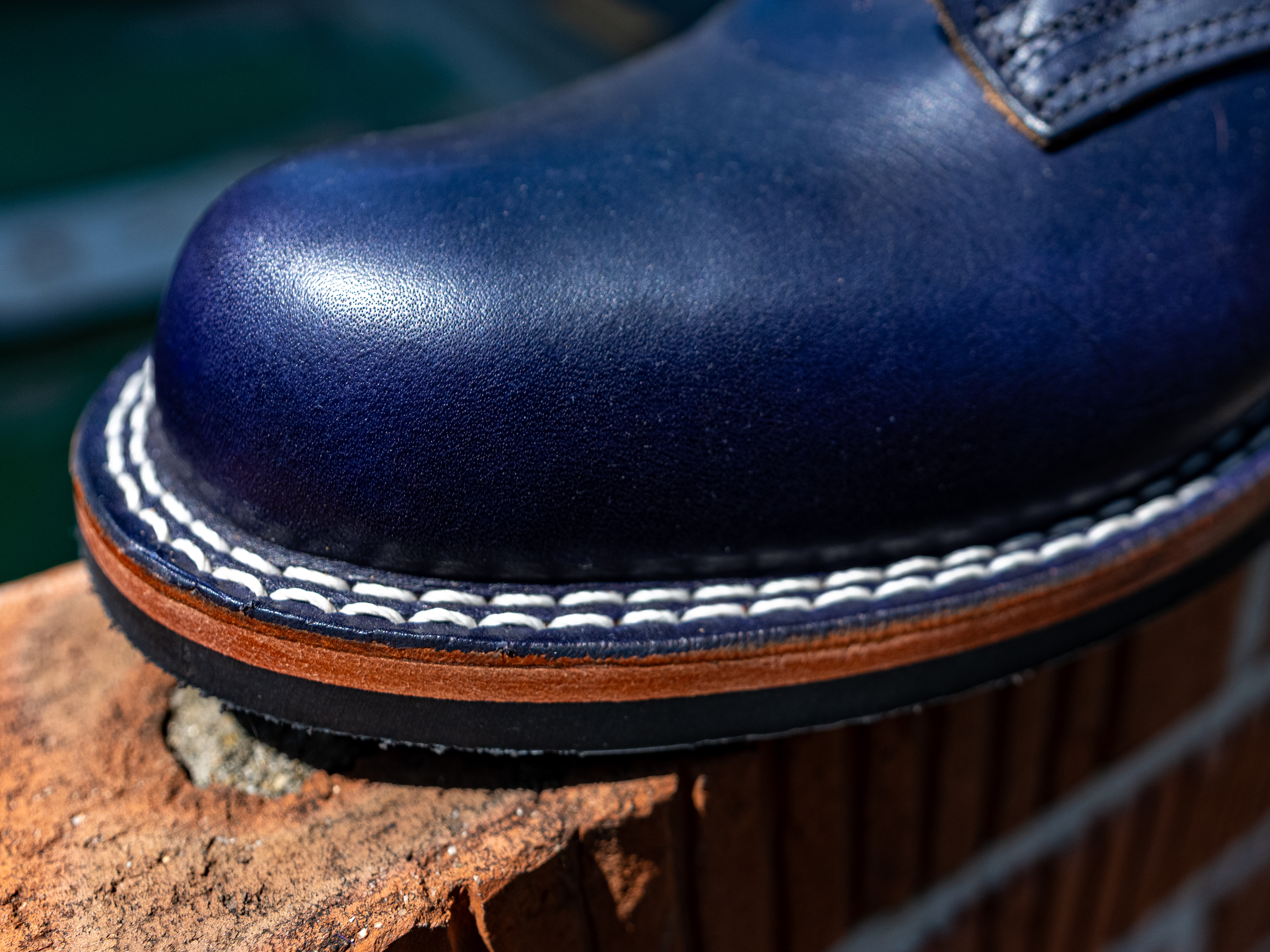
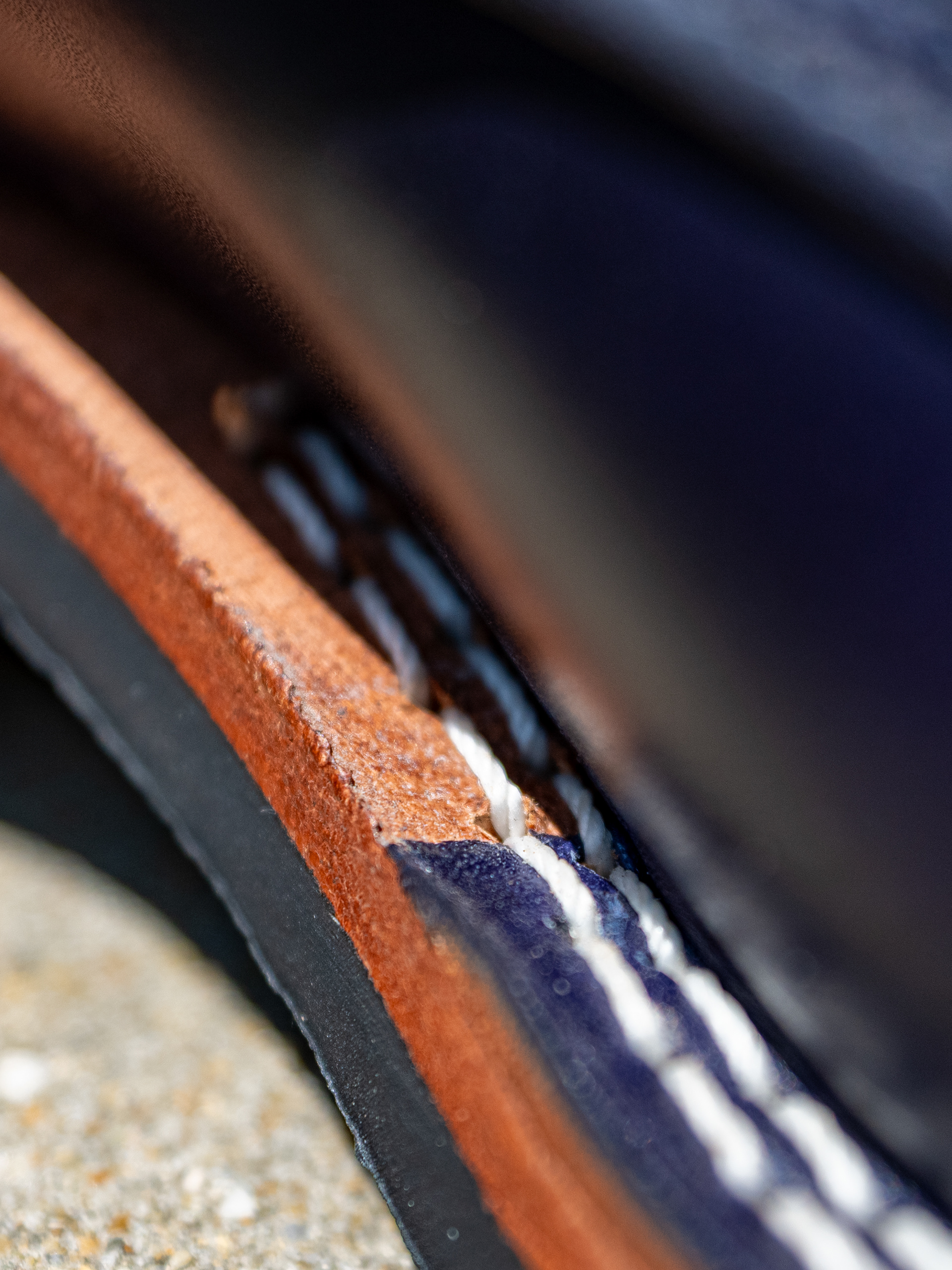
Cobalt Hide
The leather is the reason to buy almost any pair of Nicks Boots. Wickett & Craig traces its tannery history to 1867, and its process page explains why the leather feels so loaded rather than merely dyed: the hide is colored through, conditioned, and fed with waxes before finishing. On the boot, that translates into depth.
At my current pace, the leather is still closer to brand new than broken in. After six months of roughly once-a-week wear, my pair still looks spotless: no meaningful creases, no dramatic scuff story, no heroic patina (yet!). Partly praise for the leather, partly an admission of light use. The heel and counter can read darker than the toe. The shaft can look almost subdued until the light changes.
Care should be boring. Brush them. Let dust and small marks settle before reaching for product. Use conditioner carefully because oils and waxes can darken or flatten a color like this. If you panic at the first crease, maybe these aren't for you; the wear and tear over time is what makes them special.
Under the Color
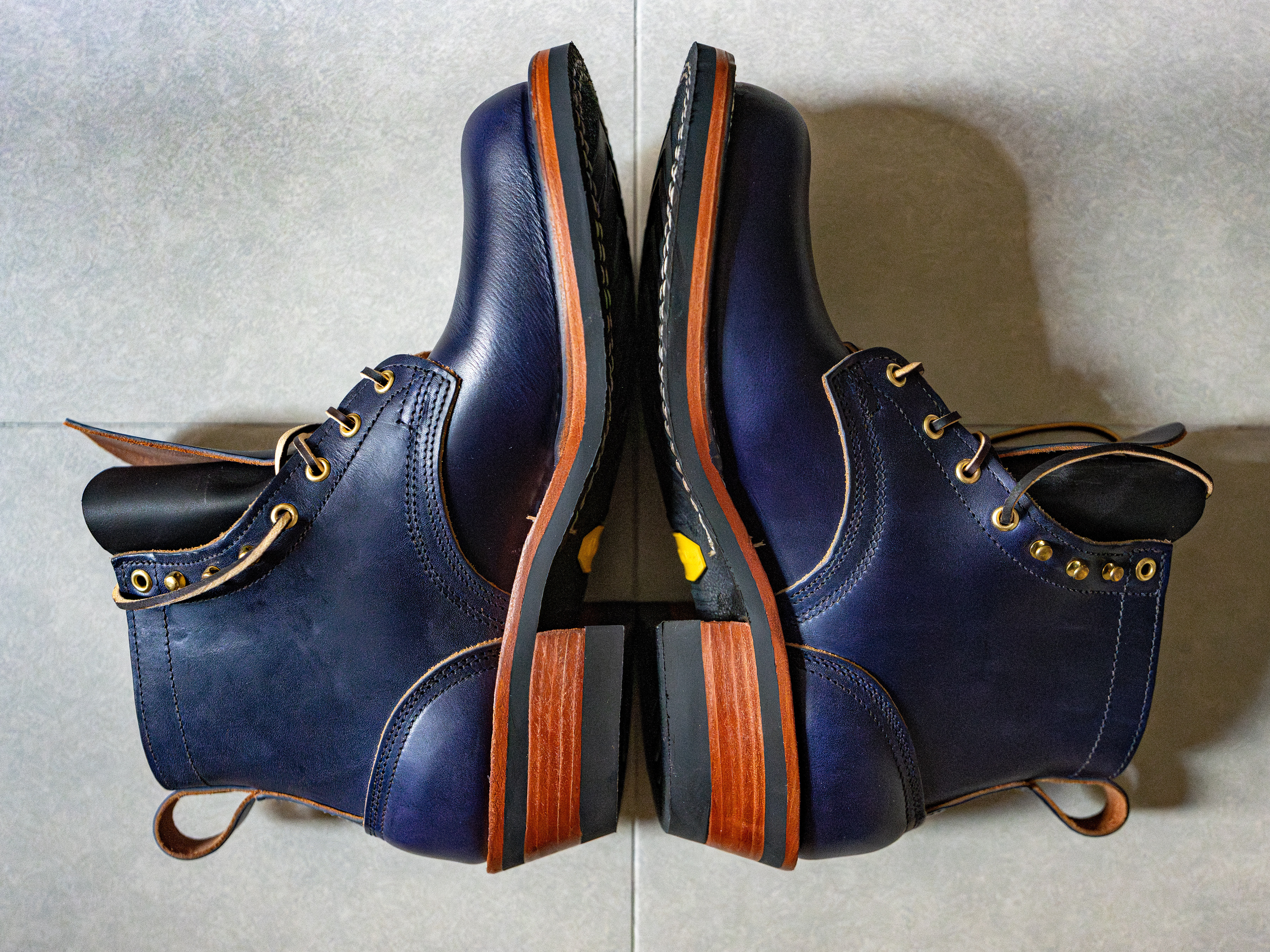
Nicks' stitching specs describe outsole stitch rows as vertical stitching through the upper, midsole, slip sole if present, and outsole; its classic stitchdown section says standard show stitching wraps 270 degrees around the toe. That construction gives the Robert its visible edge. The look is part of the pleasure, although serviceability is the real point. The Robert product page lists the boot as resoleable and rebuildable, and the company sells a standard rebuild. As someone that doesn't own another pair of boots, and is by no means an expert or veteran of the space, this is very appealing to know that a one-time investment will last a lifetime.
Its lead-times page, checked in June 2026, lists rebuilds at 12 to 16 weeks, standard boots at 22 to 28 weeks, quick ship at 10 to 14, and lightning ship at six to eight.
The V-bar sole is the right sole for this version if your life is mostly pavement, office floors, restaurants, stairs, sidewalks, and dry concrete. It keeps the profile clean and stops a cobalt heritage boot from looking like it dressed for a job site it will never visit. Mud, ice, loose gravel, oily floors, and wet tile call for another sole. A lug sole would add traction and make the boot more useful in bad ground, while also making this color visually heavier, louder underfoot, and less easy indoors. That trade is real.
The dogger heel works because it sharpens the side profile. The angle gives the Robert a little forward lean and keeps the back of the boot from looking blocky. A block heel would be easier to explain and less interesting to look at. The celastic toe earns its place for the same reason. Cobalt leather needs shape. A soft toe would relax sooner and make the front look more casual; the structured toe keeps the plain-toe shape clean while the leather earns its creases around it.The heel keeps the side profile sharp, the toe keeps the blue from collapsing into costume.
Verdict
The Robert in Cobalt is overbuilt for my life, intentionally, which is part of the pleasure. I'm wearing these through sidewalks, airports, restaurants, errands, and rooms where carpet is the harshest terrain. This changes soon, however. The plan is to take this pair into rougher and more extreme cold climates while traveling for photography.
For now, the use case is simple: special outings, walking around in a good outfit, and letting one object carry more of the room than a normal shoe ever would. The Robert is close to perfect for the job I intended.
My advice is narrow. Buy this after the safe brown boot is handled. Buy it if you already know you like high arches, heavy leather, structured toes, and the slow satisfaction of a boot that improves through use. Buy it if your clothes are mostly quiet and you want one object to carry the room. The blue is not versatile the way brown is versatile. It is versatile only if your wardrobe already leaves room for it, but I've no regrets picking it over brown.
Skip it if you need lightweight comfort, bad-weather traction, a one-pair wardrobe, or fast delivery. Skip it if the 55 last scares you. Skip it if you want your boots to look the same after 50 wears.
The cobalt Robert is heavy, stiff, slow, expensive, specific, and worth wanting. If the safe pair is already in your closet, this is the dangerous one you need.
Below, my daily driver, and the ride I take when I'm feeling fancy.